
The Hidden Mechanics Behind Most Beginner Running Injuries
Most beginner running injuries start as small form and load issues. Learn the early mechanics signals and simple fixes—no lab or watch required.
Why beginner injuries are usually a mechanics problem (not a toughness problem)

Most early running injuries aren’t mysterious—they’re predictable outcomes of biomechanics plus fast-changing training load. When your weekly volume, pace, or hills ramp up, your tissues need time to adapt. If your movement pattern concentrates stress in the same place every step, that “small” overload becomes shin splints, runner’s knee, or plantar pain. That’s why injury-prevention starts with two levers: how much you run and how you move.
The hidden part is that form changes often show up before pain. Common precursors include overstriding (landing too far ahead), low or inconsistent cadence, rising ground contact time with fatigue, and left/right asymmetry after a hard day. You don’t need a lab to notice trends—simple check-ins like “Do my steps sound heavier late in runs?” or “Does one side feel tighter?” can be enough.
Wearable-free runners can still get actionable data from foot-based sensing; systems like StrideSense Footwear measure cadence, contact patterns, and balance from in-shoe IMUs to surface running-form cues early—especially helpful for beginner-runners building confidence.
The mechanics behind shin splints, runner’s knee, and plantar pain—and the signals that come first
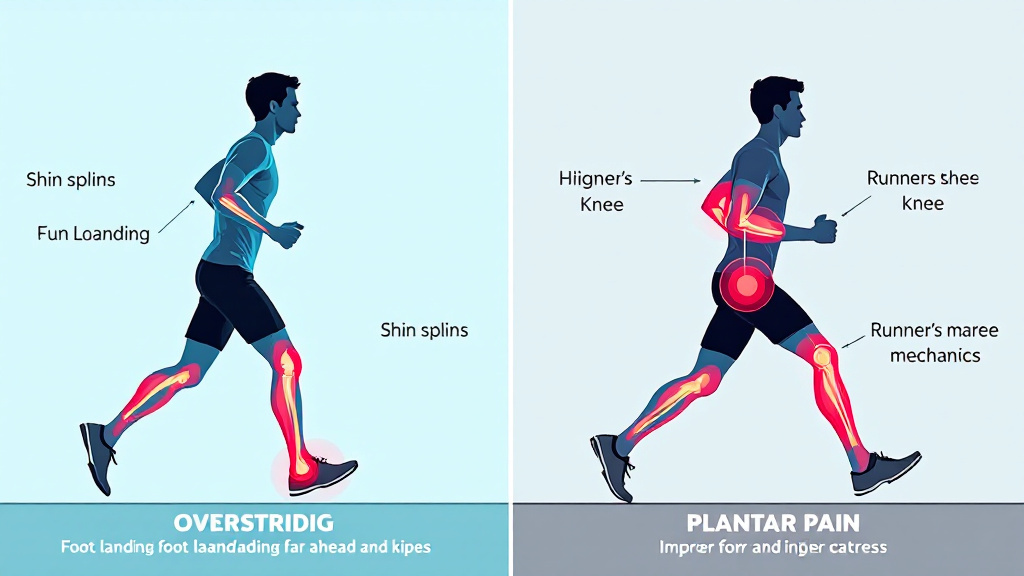
A helpful way to decode pain is to ask: Where is load going, and why? Shin splints often correlate with sudden mileage increases, lots of downhill, and a “braking” stride—frequently paired with overstriding and long contact time. Runner’s knee (front/side knee pain) is commonly linked to hip control and step mechanics that increase knee stress, especially when cadence is low and the knee takes a bigger share of impact. Plantar pain tends to show up when the foot and calf complex is overloaded—often after speedwork or hill spikes, or when landing feels heavy and stiff.
Form signals that often precede pain include: increasing asymmetry late in runs, cadence drifting down as fatigue rises, louder/heavier footfalls, and repeated “same-spot” tightness the next morning. These are practical biomechanics flags—especially for beginner-runners who are still finding an efficient stride.
If you notice X, try Y: overstriding → shorten stride and aim +5–10% cadence; one-sided soreness → add easy run/walk intervals and single-leg balance work; heavy landings → do 4–6 × 20-second “quiet feet” strides; knees irritated on descents → shorten steps downhill and keep effort easy while you rebuild.
How to spot issues early and adjust—simple drills and tracking that fit real life
Early detection is the underrated skill in injury-prevention. Once pain is loud, you’re managing symptoms; before that, you can manage signals. During your next week of training, pick one “anchor metric” you can observe: cadence consistency, left/right balance, or how quickly your form deteriorates. A simple rule: if a cue worsens at the same point every run (minute 12, the first hill, the last mile), treat that as a load-and-mechanics threshold to respect and gradually extend.
Practical adjustments that don’t require lab testing: keep most runs conversational, increase weekly volume slowly, and use short technique “snacks” after warm-up—2 minutes of brisk marching, 2 × 30 seconds of quick feet, or 3 × 20 seconds of relaxed strides. When discomfort appears, switch to run/walk for a week while maintaining frequency; this preserves fitness without forcing form breakdown.
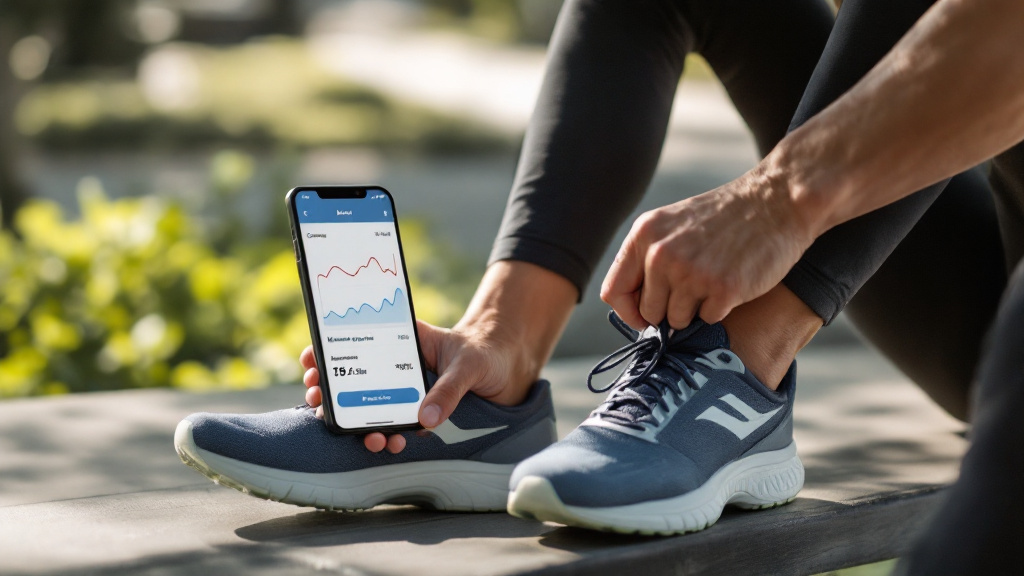
Tracking makes this easier. If you don’t wear a watch, foot-based sensors and an app can still capture cadence, contact patterns, and asymmetry trends to guide running-form tweaks (for example, a metronome drill when cadence drifts). The goal isn’t perfection—it’s noticing changes early and keeping mechanics stable as your miles grow.